
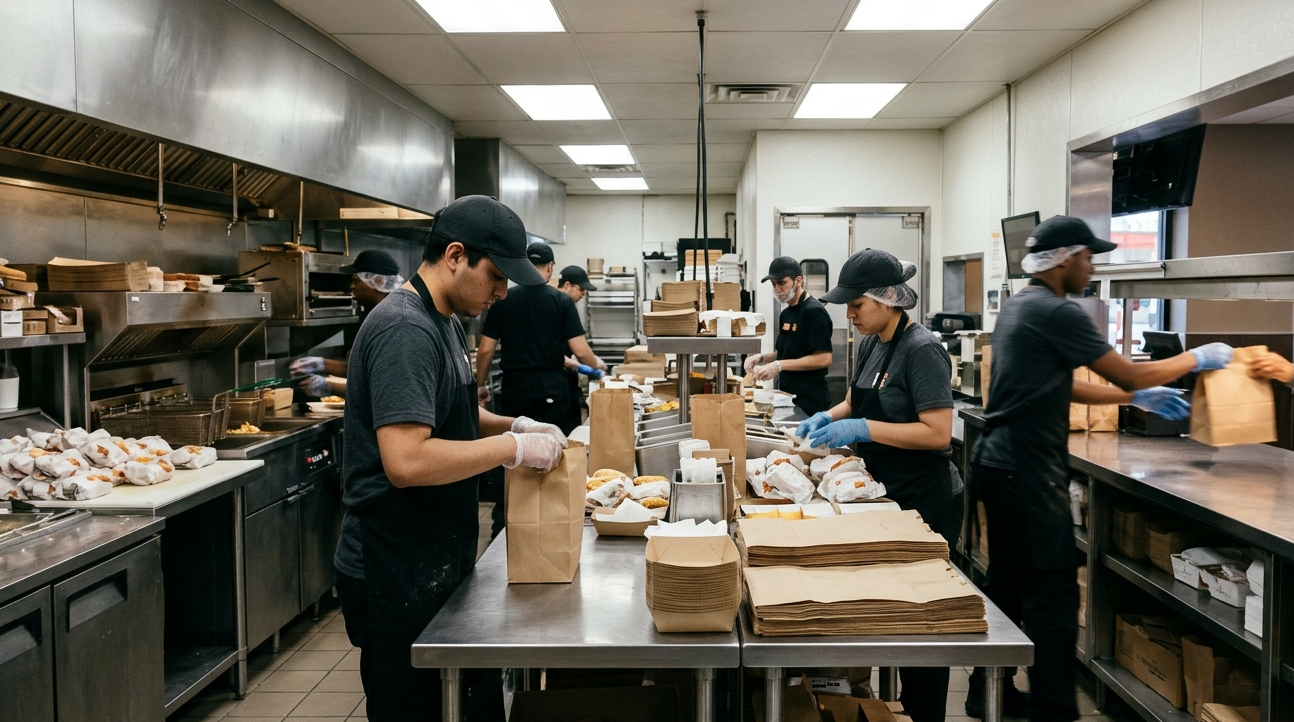
Tomorrow’s lunch forecast is $2,400. How many people should be on the line at noon? Start with a recent lunch when the crew handled similar demand and orders went out on time. Use that shift to estimate hours, then assign those hours to stations and times. Someone has to prep the first batch before lunch and cover the pickup counter when mobile orders come due.
Find a shift worth repeating
Pull the sales, order count, clocked hours and ticket times for the last few comparable lunches. Look at the busiest half hour on each one. A shift that hit its sales target while cars backed up into the street is a poor staffing model. Pick a shift when the team kept up, and ask the shift lead what made it work.
Check what changed before you borrow that pattern. For example, $2,400 in forecast sales divided by a comparable $12 average check implies about 200 orders. A price increase can raise forecast sales while leaving the number of sandwiches to make roughly the same. A school event can concentrate a familiar number of orders into a much shorter window. Write the difference beside the forecast so the person opening the store knows what to watch.
Estimate hours for the same window
Suppose a comparable two-hour lunch took in $2,160 with 18 clocked labor hours, including the shift lead. That works out to $120 per labor hour. At that store’s recent pace, a $2,400 forecast suggests 20 labor hours over the two-hour lunch. These are illustrative figures. Use the same definition of sales, the same roles and the same time window on both sides of the calculation.
Ten people working both hours would supply those 20 hours. So would nine in the first hour and eleven in the second. The difference matters if a delivery order for 30 meals is due at 12:15. Work backward from pickup to decide when assembly and packing need the extra pair of hands.
Put a name against each station
Sketch the lunch in half-hour blocks. For each block, name the people who can cover cooking, assembly, order taking, packing and handoff. Mark the manager on duty and who relieves each person for a break. A cross-trained crew member can move from prep to packing when prep finishes. Counting that person in both places at noon leaves one job uncovered.
Give opening prep, deliveries and closing work their own time blocks. If the 20-hour estimate covers 11 a.m. to 1 p.m., a cook arriving at 10:30 contributes half an hour outside that window. Put it on the schedule and account for it separately. Check availability and projected weekly hours before offering an extension.
Give the shift lead a decision to make
Record one signal and one move for the busiest block. For example, if cooked orders are waiting for bags while the grill is keeping pace, move the designated relief person to packing once their current station is covered. Adding a second cook would leave the same orders waiting. If the orders themselves are late reaching the grill, investigate that handoff first.
Check the forecast against the shift
After lunch, line up forecast and actual orders, scheduled and clocked hours, and ticket times by half hour. If the order count came in close but the queue grew just before noon, check whether breaks or late starts left a station empty. If a large order landed earlier than expected, adjust the prep window for the next comparable day.
Keep a short note with the next schedule: what happened, what the lead changed and what they’ll try next time. For the broader measures that tell you whether a shift worked, use the restaurant labor productivity guide.
Questions from the schedule desk
What if the store has a sales forecast but no transaction forecast?
Use a comparable shift’s average check to estimate orders, then check that estimate against what you know about tomorrow’s mix. A catering pickup can raise the average check while concentrating most of the packing work into one short window.
Should two stores with the same forecast schedule the same hours?
Build a baseline for each store. At one location a crew member can bag and hand off an order from the same position. At another, a separate pickup area needs coverage during the rush. A shared sales target doesn’t resolve that difference.
What should I do if the hours estimate leaves a required station uncovered?
Fix the coverage gap before posting the schedule. Try a staggered start or move a trained person from a quieter block. If the store still needs more hours, document the station and time that require them so the next review starts with a specific decision.